
Delta 9 To THC Conversion
The conversion of Delta 9 THC to other tetrahydrocannabinol (THC) compounds is a subject of increasing interest among cannabis enthusiasts, researchers, and manufacturers. As cannabis science advances, understanding how Delta 9 THC transforms into other cannabinoids—both naturally and through lab-controlled processes—can provide valuable insights into product potency, effects, and potential benefits.
The Science Behind Delta 9 THC Conversion
Delta 9 THC, the primary psychoactive compound in cannabis, can undergo various transformations depending on environmental factors and chemical interactions. This conversion process can occur naturally through oxidation, heat, or light exposure, or it can be chemically induced in laboratory settings. Over time, Delta 9 THC degrades into CBN (cannabinol) when exposed to air, resulting in a compound known for its sedative properties. However, controlled environments can alter Delta 9 THC into different THC analogs, such as Delta 8 THC, THC-O, or THC-P, each with unique effects and potency levels.
Delta 9 to Delta 8 THC Transformation
One of the most common conversions is from Delta 9 THC to Delta 8 THC. Although both compounds share similar molecular structures, Delta 8 THC has a more stable and slightly altered chemical makeup, often resulting in a milder psychoactive effect.
This transformation typically requires an acid-catalyzed reaction, which involves solvents and catalysts to isomerize the Delta 9 molecule. The process enhances stability and extends shelf life while maintaining significant psychoactive effects, making Delta 8 THC a popular alternative in legal markets.
Delta 9 THC to THC-O and Other Derivatives
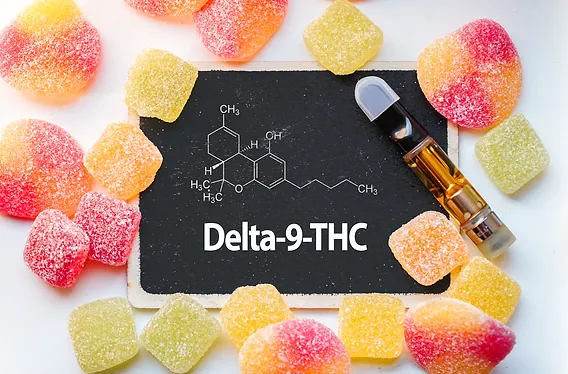
Another significant transformation involves THC-O (THC-O acetate), a synthetic cannabinoid known for its high potency. Unlike Delta 9 THC, which directly interacts with CB1 receptors, THC-O is a prodrug, meaning it must be metabolized before producing effects. This conversion process involves adding an acetate group to the THC molecule, enhancing its bioavailability and making it more potent than its natural counterpart. Similarly, THC-P (tetrahydrocannabiphorol), a highly potent analog, can be synthesized from Delta 9 THC, offering a more intense and long-lasting experience due to its stronger receptor-binding affinity.
Legal and Industry Implications
The conversion of Delta 9 THC to other THC variants plays a crucial role in the cannabis and hemp industries, particularly in regions where Delta 9 THC remains highly regulated. Since many converted cannabinoids, such as Delta 8 THC and THC-O, can be derived from hemp-derived CBD, they often fall into legal gray areas. Manufacturers use these conversion methods to produce compliant products that meet federal and state regulations while still offering psychoactive effects.
Conclusion
Understanding Delta 9 THC conversion is essential for consumers, manufacturers, and regulators as the cannabis industry continues to evolve. Whether naturally occurring or lab-induced, these transformations expand the range of available THC products, providing diverse effects and benefits. As research progresses, further insights into these conversions will shape the future of cannabinoid science and product innovation.